Category: Sleep

How sleep works, and thoughtful things for darker, quieter nights.

  • Does Your Brain Clean Itself While You Sleep? Scientists Disagree

    Does Your Brain Clean Itself While You Sleep? Scientists Disagree

    You may have read that sleep “washes” your brain clean every night. It is a beautiful idea, and it came from real research. But newer experiments have challenged it, and scientists are still arguing about it.

    The 2013 discovery

    In 2013, a team led by Dr. Maiken Nedergaard at the University of Rochester published a study in Science. Working with mice, they reported that during sleep the spaces between brain cells grew larger, letting fluid flow through the brain much more easily.

    They called this waste-removal network the glymphatic system. In their experiments, a protein linked to Alzheimer’s disease, beta-amyloid, was cleared faster from the brains of sleeping mice than from awake ones. The U.S. National Institutes of Health announced it with the headline that the brain may flush out toxins during sleep.

    The 2024 challenge

    In 2024, researchers at Imperial College London and the UK Dementia Research Institute published a study in Nature Neuroscience using a different method. They injected a fluorescent dye into mouse brains and measured how fast it was cleared.

    Their result was the opposite: clearance was lower during sleep, and even lower under anaesthesia, than when the mice were awake. The team concluded that clearing toxins may not be the core reason we sleep.

    Who is right?

    Not settled yet. The original team argued that the newer method could disturb the brain and measure something different, and the Imperial team replied that those criticisms were wrong. Both studies were in mice, and evidence in people is still limited.

    What both sides agree on: sleep matters a great deal for health, memory and mood. Even the 2024 researchers said good sleep may still lower the risk of dementia, just perhaps for other reasons.

    In short

    • A 2013 mouse study found the brain cleared waste faster during sleep.
    • A 2024 mouse study found clearance was lower during sleep.
    • Scientists still debate the cause, but agree that sleep is vital.

    Sources

    This article is for curiosity and learning only and is not medical advice.
  • How to Choose a Sleep Mask: A Simple Guide

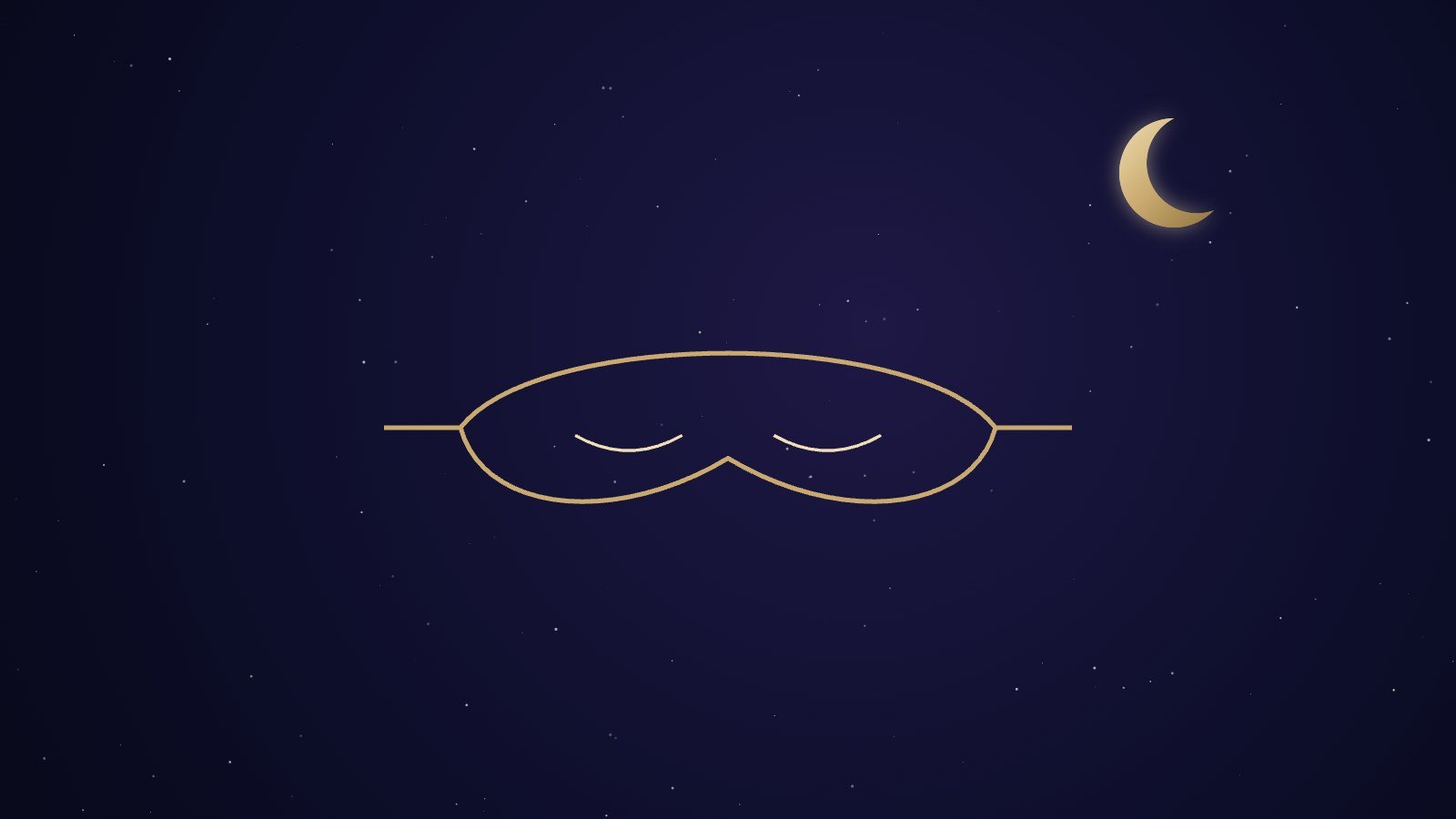
    How to Choose a Sleep Mask: A Simple Guide

    As an Amazon Associate, Bodelune earns from qualifying purchases. This never changes what we write.

    Street lights, early sunrise, a partner reading late, a bright hotel room. A good sleep mask is one of the simplest ways to make your nights darker. Here is how to pick one that feels right.

    Why darkness matters

    Your body uses light as a signal for when to be awake. In the evening, darkness helps your brain release melatonin, the hormone that helps prepare you for sleep. Light at night can delay that signal. A mask is an easy way to block light when you cannot control the room.

    1. Contoured or flat?

    Contoured masks have cups that curve away from your eyes. Nothing presses on your eyelids or lashes, so they suit people who dislike pressure or who wear lash extensions. Flat masks are thinner and softer, and they fold easily for travel.

    2. Choose the material

    • Silk: smooth, light and gentle on skin and hair. Many people find it the most comfortable.
    • Cotton: soft, breathable and easy to wash.
    • Memory foam: holds its shape and often blocks light best, but can feel warmer.

    3. Check how well it blocks light

    Light usually sneaks in around the nose. Look for a mask with a soft nose flap or a shaped bridge. Reading buyer reviews about “light leaks” is one of the best ways to check.

    4. Get the strap right

    An adjustable strap lets you find a snug fit without squeezing. If you sleep on your side, choose a thin, flat strap and a slim mask so it does not dig in or slip off at night.

    5. Think about where you will use it

    For flights and trains, a light mask that comes with a small pouch is handy. For every night at home, comfort and easy washing matter most. Some people keep one of each.

    Quick picks

    Sources

    This guide is for general information only. If you have ongoing sleep problems, talk to a doctor.

  • What Happens to Your Body If You Don’t Sleep for 24, 48 and 72 Hours?

    What Happens to Your Body If You Don’t Sleep for 24, 48 and 72 Hours?

    Most of us have pulled an all-nighter at least once. It feels like nothing more than a heavy head the next day. But inside, your brain and body change faster than you might think. Here is what science says happens, step by step.

    After 17 to 24 hours: like having a drink

    Research summarized by the U.S. National Institute for Occupational Safety and Health (NIOSH, part of the CDC) compares tiredness to alcohol. Being awake for 17 hours affects you about as much as a blood alcohol level of 0.05%. After 24 hours awake, the effect is similar to 0.10%, which is above the legal driving limit in the United States.

    At this point it gets harder to focus, remember new things and react quickly. Many people also feel more anxious, irritable or “off”. Mistakes and near misses become more likely, especially behind the wheel.

    After about 36 hours: microsleeps

    The urge to sleep becomes very strong. Your brain may start taking microsleeps: tiny moments of sleep that last only a few seconds, often without you noticing. Mood can swing more easily, and stress becomes harder to handle.

    After about 48 hours: the senses start to play tricks

    According to the Sleep Foundation, hallucinations become likely after around two days without sleep. Vision can blur or double, and people may see, hear or feel things that are not there. The world can start to feel strange or unreal.

    After 72 hours: the body can barely keep going

    Only a small number of studies have followed people who stayed awake this long. In them, people began to slur their words and walk unsteadily, and their sense of reality became badly distorted. At this stage most people simply cannot stay awake on their own.

    The most famous case is Randy Gardner, a 17-year-old student who stayed awake for about 11 days in 1964 for a school science project. Experiments like his are no longer encouraged, because staying awake that long is risky.

    The good news: sleep repairs most of it

    For healthy people, the effects of one short stretch without sleep usually fade after a proper night of rest. The bigger concern is losing sleep night after night. The CDC recommends that adults get at least 7 hours of sleep, yet about one in three U.S. adults regularly gets less than that.

    In short

    • 24 hours awake affects you about like a 0.10% blood alcohol level.
    • Around 36 hours, microsleeps can appear without you noticing.
    • Around 48 hours, hallucinations become likely.
    • Adults need at least 7 hours of sleep a night.

    Sources

    This article is for curiosity and learning only and is not medical advice. If you have trouble sleeping, talk to a doctor.